Aloe Vera
Aloe vera
Also called: Medicinal Aloe, True Aloe
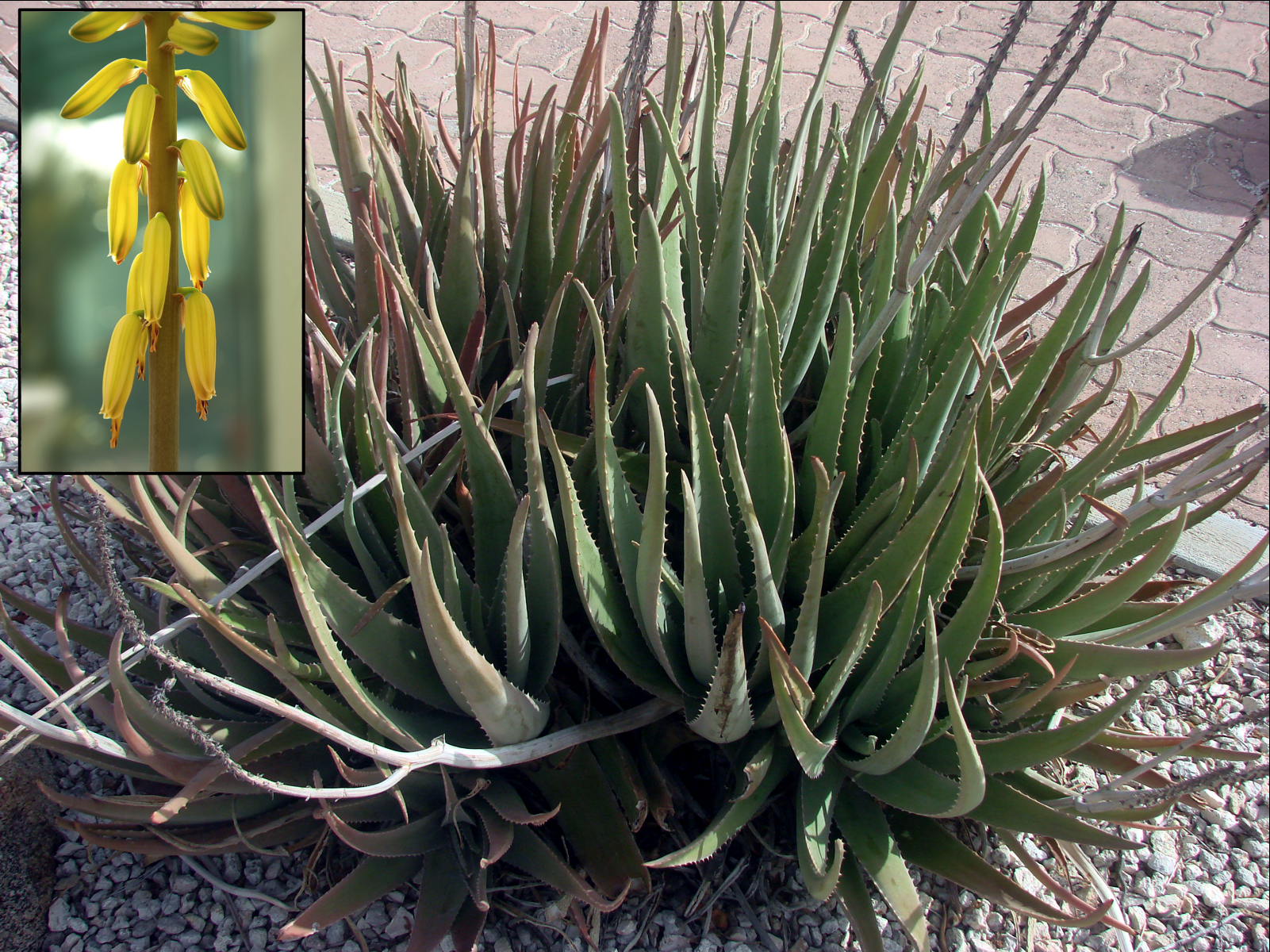
Aloe Vera. Aloe vera is a stemless succulent of disputed wild origin — likely the Arabian Peninsula — now grown in dry climates worldwide for its gel-filled leaves. Rosettes of fleshy, serrate-edged leaves can reach 2 feet across; mature plants send up tall stalks of tubular yellow flowers in spring. The leaf gel is the source of the topical cosmetic ingredient.
Growing & care
- Light: bright indirect to direct sun. Outdoors, acclimate gradually to full sun to prevent leaf burn.
- Water: deep, infrequent. Soak the soil, then let it dry completely — every 2–4 weeks indoors, more often in active summer growth.
- Soil: cactus mix or any sharply drained substrate. Garden loam holds too much water.
- Hardiness: USDA zones 9–11 outdoors. Grown as a houseplant elsewhere; bring indoors before frost.
- Pot: terracotta with drainage holes. Plastic pots demand stricter watering restraint.
- Temperature: 55–85°F; avoid temperatures below 50°F.
Propagation
Aloe vera produces offsets ("pups") at the base. Wait until pups are 3–4 inches tall with their own roots, then pry away with a clean knife and let the cut callous over for 24 hours before potting in dry cactus mix. Withhold water for the first week after planting.
Common problems
The single most common death cause is rot from overwatering — the entire base turns soft and brown. Drop the watering frequency by half if leaves curl inward or turn pale. Leaves with brown tips indicate sunburn or under-watering, depending on whether the plant is dry. Scale insects show as small brown bumps on leaves; wipe with rubbing alcohol on a cotton swab. The leaf latex (yellow sap beneath the skin) is toxic to dogs and cats; the inner gel is the part used topically.
Aloe Vera — seeds, tools & books
Native range
Native range not recorded for this plant. Often a non-native cultivar or naturalized garden plant.


