Common Sage
Salvia officinalis
Also called: Garden Sage, Culinary Sage
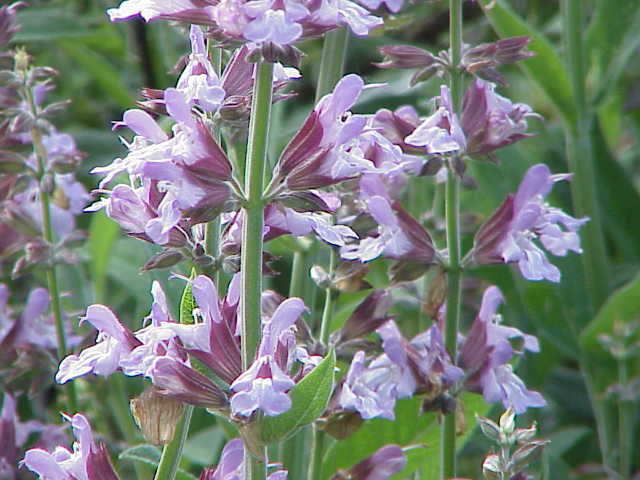
Common Sage. Salvia officinalis, common sage or sage, is a perennial, evergreen subshrub, with woody stems, grayish leaves, and blue to purplish flowers. It is a member of the mint family (Lamiaceae) and native to the Mediterranean region, though it has been naturalized in many places throughout the world. It has a long history of culinary use, and in modern times it has been used as an ornamental garden plant. The common name "sage" is also used for closely related species and cultivars.
Growing & care
- Sun: full sun. Essential for both flavor concentration and disease prevention.
- Water: low once established. Drought-tolerant; overwatering produces lush bland leaves and root rot.
- Soil: lean, sandy, sharply drained, slightly alkaline. Heavy or fertile soil dilutes flavor and shortens lifespan.
- Hardiness: USDA zones 4–8 for the species; less hardy variegated cultivars die at zone 6.
- Spacing: 18–24 inches apart for airflow.
- Pruning: light shaping in early spring as new growth emerges; never cut into bare woody growth — sage rarely resprouts from leafless wood. Replace plants every 4–5 years as they become woody and unproductive.
Propagation
Softwood cuttings in late spring root in 2–3 weeks under intermittent mist in coarse sand. Layering also works: pin a low branch to the ground and cover with soil — roots form in a season. Seed is slow to germinate and produces variable plants; cuttings preserve cultivar character.
Common problems
Winter wet kills more sage than winter cold — plant on slight mounds in heavy soil. Powdery mildew appears in humid summers with poor airflow. Spittlebugs leave foamy masses on stems but cause little damage. Slugs occasionally damage variegated cultivars in damp seasons. Common sage is non-toxic to dogs and cats per ASPCA listings — a pet-safe culinary herb. Note: medicinal sage essential oil contains thujone and is not safe for prolonged use; the dried leaves used in cooking are harmless in normal amounts.
Common Sage — seeds, tools & books
Native range
Native range not recorded for this plant. Often a non-native cultivar or naturalized garden plant.


![Photo: Kurt Stüber [1] (CC BY-SA 3.0)](https://commons.wikimedia.org/wiki/File:Salvia_officinalis0.jpg)