Eastern White Pine
Pinus strobus L.
Also called: White Pine
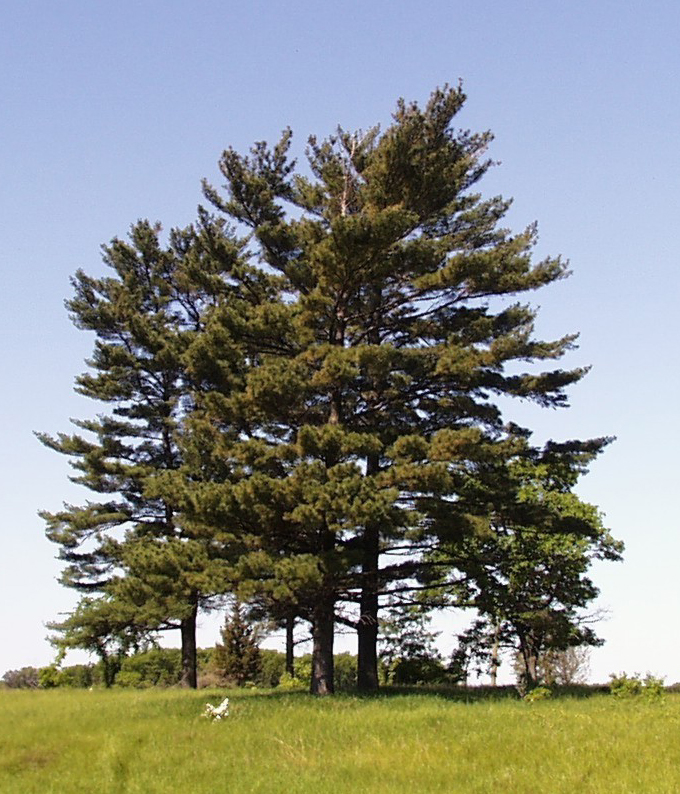
Eastern White Pine. Pinus strobus, commonly called the eastern white pine, northern white pine, white pine, Weymouth pine (British), and soft pine is a large pine native to eastern North America. It occurs from Newfoundland, Canada, west through the Great Lakes region to southeastern Manitoba and Minnesota, United States, and south along the Appalachian Mountains and upper Piedmont to northernmost Georgia and very rare in some of the higher elevations in northeastern Alabama. It is considered rare in Indiana.
Growing & care
- Sun: full sun for densest growth; tolerates light shade when young.
- Water: average; water during establishment and prolonged drought.
- Soil: moist, well-drained, slightly acidic. Intolerant of heavy clay, salt, and pollution.
- Hardiness: USDA zones 3–8.
- Mature size: 50–80 feet tall, 20–40 feet wide in landscapes; pyramidal when young, picturesque and irregular with age.
- Pruning: shear candles (new growth) in spring to keep dense for screening; avoid cutting into old leafless wood.
Propagation
Seed from the long curved cones needs cold, moist stratification for 60 days before sowing in spring. Cuttings are very difficult. Most landscape and forestry stock is seed-grown; dwarf and weeping cultivars are grafted.
Common problems
White pine is sensitive to several stresses ornamental and roadside trees commonly face: it is intolerant of road salt, air pollution, and compacted soil, often showing browning needles in such sites. White pine blister rust (a fungal disease requiring currant/gooseberry as an alternate host) and white pine weevil (which kills the leader, causing forked tops) are the main pests. Needle drop of inner needles each fall is normal, not disease. Non-toxic to dogs and cats. Give it room, acidic well-drained soil, and clean air, and it grows fast into a magnificent specimen.
Eastern White Pine — seeds, tools & books
Native range
Native range not recorded for this plant. Often a non-native cultivar or naturalized garden plant.