Sugar Maple
Acer saccharum
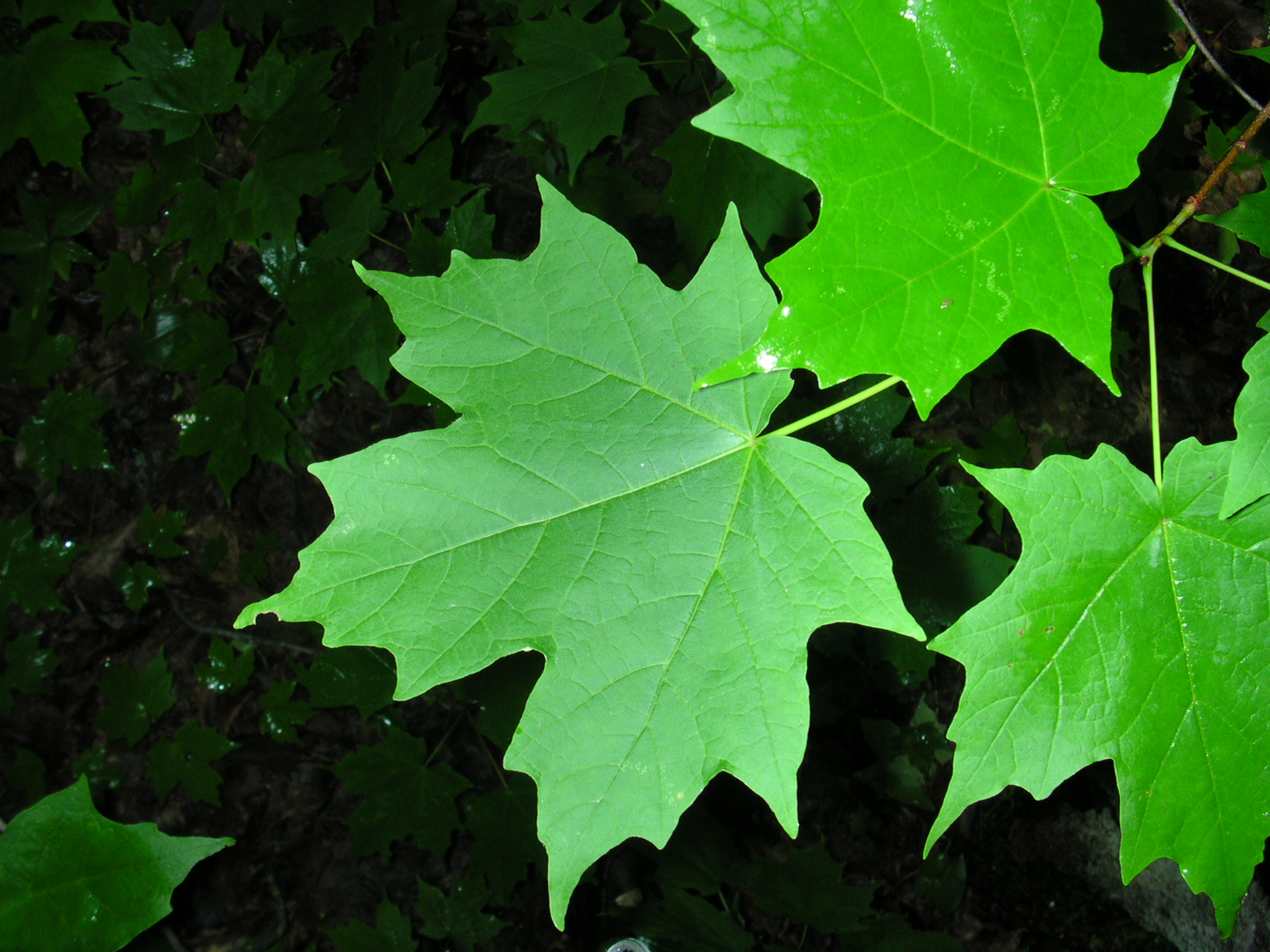
Sugar Maple. Acer saccharum, the sugar maple, is a large deciduous tree native to the hardwood forests of the northeastern and north-central United States and adjacent Canada. The sap is the source of maple syrup, the autumn foliage produces the iconic orange-to-scarlet New England color displays, and mature trees commonly reach 60–80 feet with a dense oval crown.
Growing & care
- Sun: full sun to part shade. Tolerates more shade than most large shade trees, especially as a young tree.
- Water: average. Established trees withstand short droughts but suffer in prolonged dry spells.
- Soil: deep, fertile, well-drained loam. Tolerates a wide pH range but performs best in slightly acidic to neutral soil.
- Hardiness: USDA zones 3–8. Native range does not extend into the hot southeastern lowlands.
- Mature size: 60–80 feet tall, 40–50 feet wide. Plan accordingly — these are not small-yard trees.
- Salt sensitivity: intolerant of road salt and de-icers; not a street-tree choice in northern cities.
Propagation
Fresh seed sown in fall (after the helicopter samaras drop) and cold-stratified through winter germinates the following spring. Patience required — saplings grow 12–24 inches per year and take decades to reach syrup-tap size. Cultivars like 'Bonfire' and 'Green Mountain' must be propagated by grafting to keep their selected fall color and form.
Common problems
Verticillium wilt causes scattered branch dieback and is essentially untreatable — plant resistant cultivars in soils with disease history. Anthracnose appears as brown blotches on leaves in wet springs. Tar spot makes large black spots on leaves in late summer; cosmetic only. The greatest urban-stress symptom is leaf scorch from compacted soil, drought, and reflected pavement heat — water deeply during dry summers. Sugar maple foliage is non-toxic to dogs and cats; wilted leaves of the related red maple (Acer rubrum) are toxic to horses, but sugar maple is generally considered safer.
Sugar Maple — seeds, tools & books
Native range
Native to 27 states


.jpg)