Commelina diffusa Burm. f.
Commelina diffusa Burm. f.
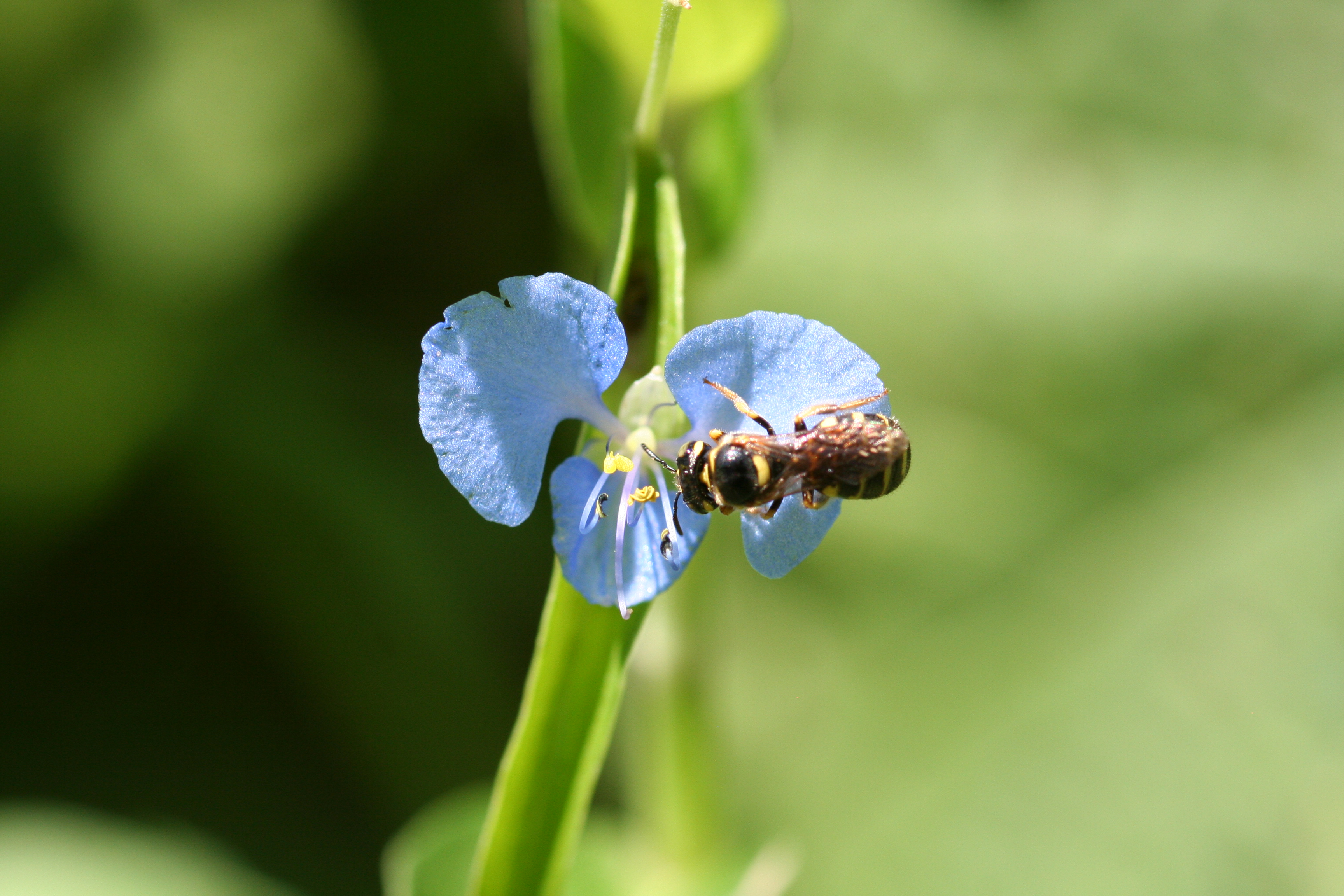
Commelina diffusa Burm. f.. Commelina diffusa, sometimes known as the climbing dayflower or spreading dayflower, is an herbaceous plant in the dayflower family. Its native distribution is Paleotropical, including tropical and southern Africa, Yemen, the Indian Subcontinent, Indochina, Peninsular Malaysia, southern China, Japan, Korea, the Philippines, New Guinea, and the Pacific Islands. It has been introduced throughout the tropical and subtropical Americas, where it is now found from the eastern and midwestern United States to northern Argentina. It has been introduced to the southeastern United States where it is most common in wet disturbed soils. There are two recognised varieties, one being the type and the other being C. diffusa var. gigas, which is native to Asia and has been introduced to Florida. It flowers from spring to fall and is most common in disturbed situations, moist places and forests. In China the plant is used medicinally as a febrifuge and a diuretic. A blue dye is also extracted from the flower for paints. In the Hawaiian Islands, it is known as "honohono grass", although it is technically not a grass. "Honohono" refers to the alternating structure of the leaves. At least one publication lists it as an edible plant in New Guinea.
Commelina diffusa Burm. f. — seeds, tools & books
Native range
Native range not recorded for this plant. Often a non-native cultivar or naturalized garden plant.