English Lavender
Lavandula angustifolia
Also called: True Lavender
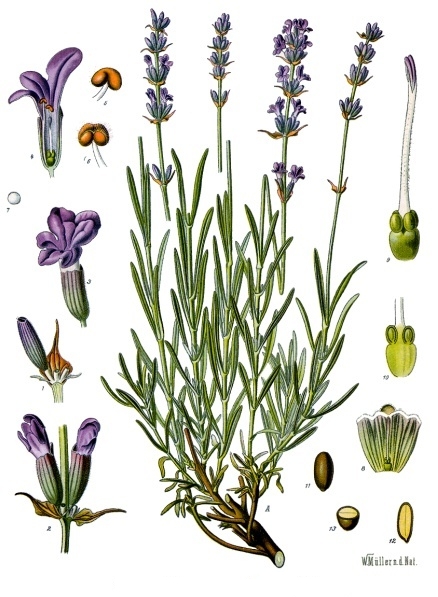
English Lavender. Lavandula angustifolia is the hardiest of the cultivated lavenders, native to the western Mediterranean and naturalized across mild-summer regions worldwide. Silver-gray aromatic foliage carries upright spikes of violet flowers from June through August. Long valued for fragrance, culinary use, and pollinator support.
Growing & care
- Sun: full sun, minimum 6 hours direct. Anything less produces lanky, mildew-prone plants.
- Water: very low once established; weekly the first season, then rainfall only. Drought-tolerant by year two.
- Soil: lean, alkaline, sharply drained. Heavy clay is the most common killer — amend with gravel or plant on a mound.
- Hardiness: USDA zones 5–9. Cultivars 'Hidcote' and 'Munstead' are reliable to zone 5.
- Spacing: 18–24 inches apart for airflow. Crowding causes fungal dieback.
- Pruning: trim by one-third after the main bloom flush; never cut into bare woody growth.
Propagation
Softwood cuttings in late spring root readily in coarse sand kept barely moist. Take 3-inch tips, strip lower leaves, dip in rooting hormone, and tent loosely with plastic until new growth appears. Seed-grown plants vary in habit; cuttings preserve cultivar character.
Common problems
Winter wet kills more lavender than winter cold — heavy mulch right against the crown is harmful. Phytophthora root rot appears in poorly drained beds. Spittlebugs leave foamy masses on stems but cause little real damage. Replace plants every 4–7 years as they grow woody and bloom decreases.
English Lavender — seeds, tools & books
Native range
Native range not recorded for this plant. Often a non-native cultivar or naturalized garden plant.