Russian Sage
Salvia yangii
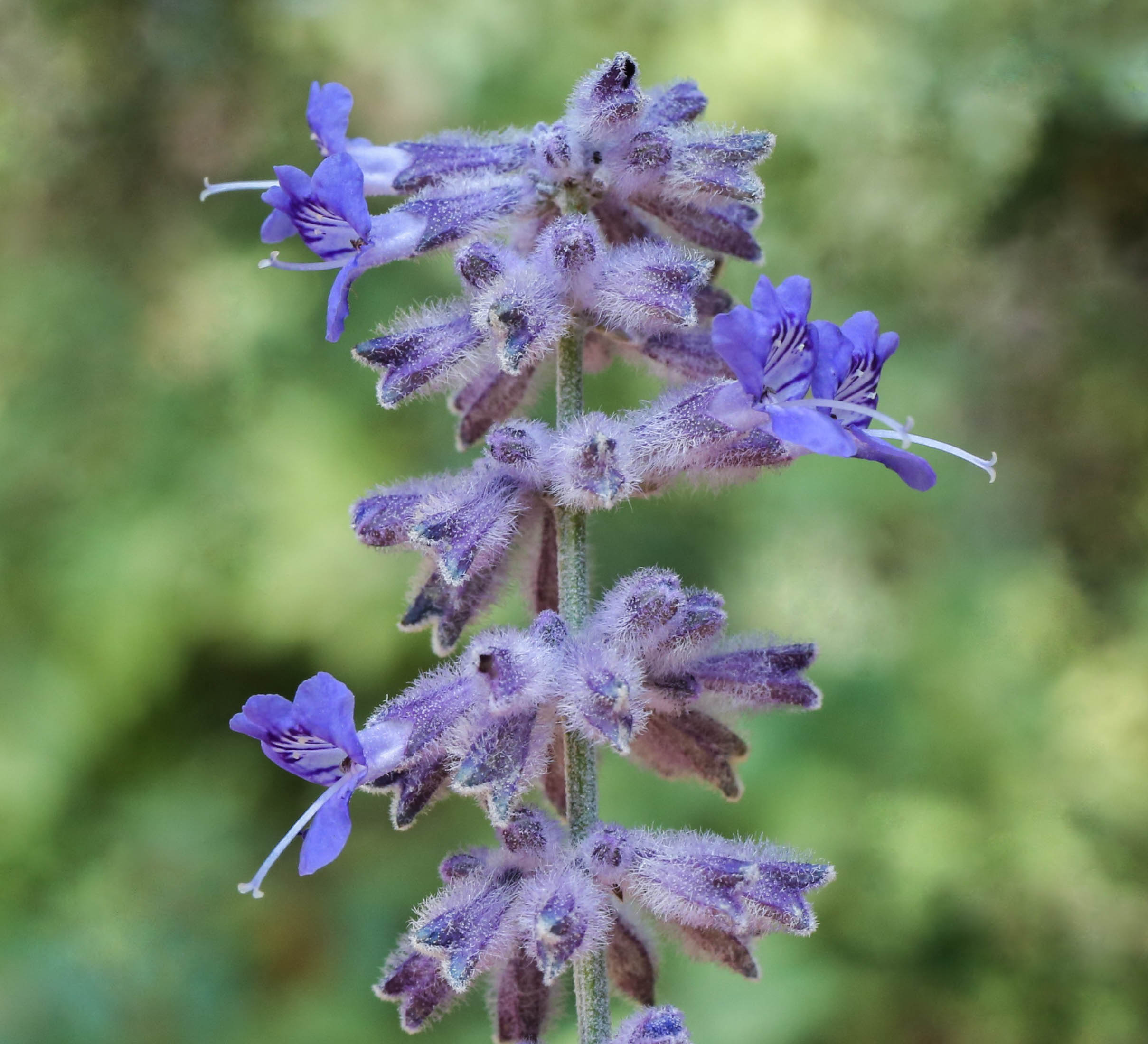
Russian Sage. Salvia yangii (formerly Perovskia atriplicifolia), commonly called Russian sage, is a deciduous woody-based perennial native to dry steppes and rocky slopes from western China to Iran — despite the misleading common name. Tall, see-through silvery stems carry whorls of small lavender-blue flowers from midsummer through fall above finely dissected aromatic silver foliage.
Growing & care
- Sun: full sun, minimum 6 hours direct. Anything less produces lanky, flopping stems.
- Water: very low. Drought-tolerant once established; weekly soak the first season only.
- Soil: lean, alkaline, sharply drained. Rich, moist soil produces tall floppy growth.
- Hardiness: USDA zones 4–9. Root-hardy across the range; treat as a die-back perennial in cold zones.
- Mature size: 3–4 feet tall and wide.
- Pruning: cut to 6 inches in early spring before new growth begins. The plant breaks new wood at the cut points and stays upright. Skipping this cut produces the trademark flop.
Propagation
Softwood cuttings in late spring root in 2–3 weeks in moist perlite. Take 4-inch tips with two pairs of leaves, dip in rooting hormone, and keep humid until rooted. Division is difficult due to the woody base. Seed-grown plants are highly variable in habit and bloom.
Common problems
Flopping mid-summer is the single most common complaint — almost always traced to rich soil, too much water, or skipping the early-spring hard cut-back. Crown rot follows winter wetness in poorly drained beds — plant on a slight mound. Deer and rabbits avoid the strongly aromatic foliage. Russian sage is non-toxic to dogs and cats per ASPCA listings.
Russian Sage — seeds, tools & books
Native range
Native range not recorded for this plant. Often a non-native cultivar or naturalized garden plant.