Purple Coneflower
Echinacea purpurea
Also called: Eastern Purple Coneflower
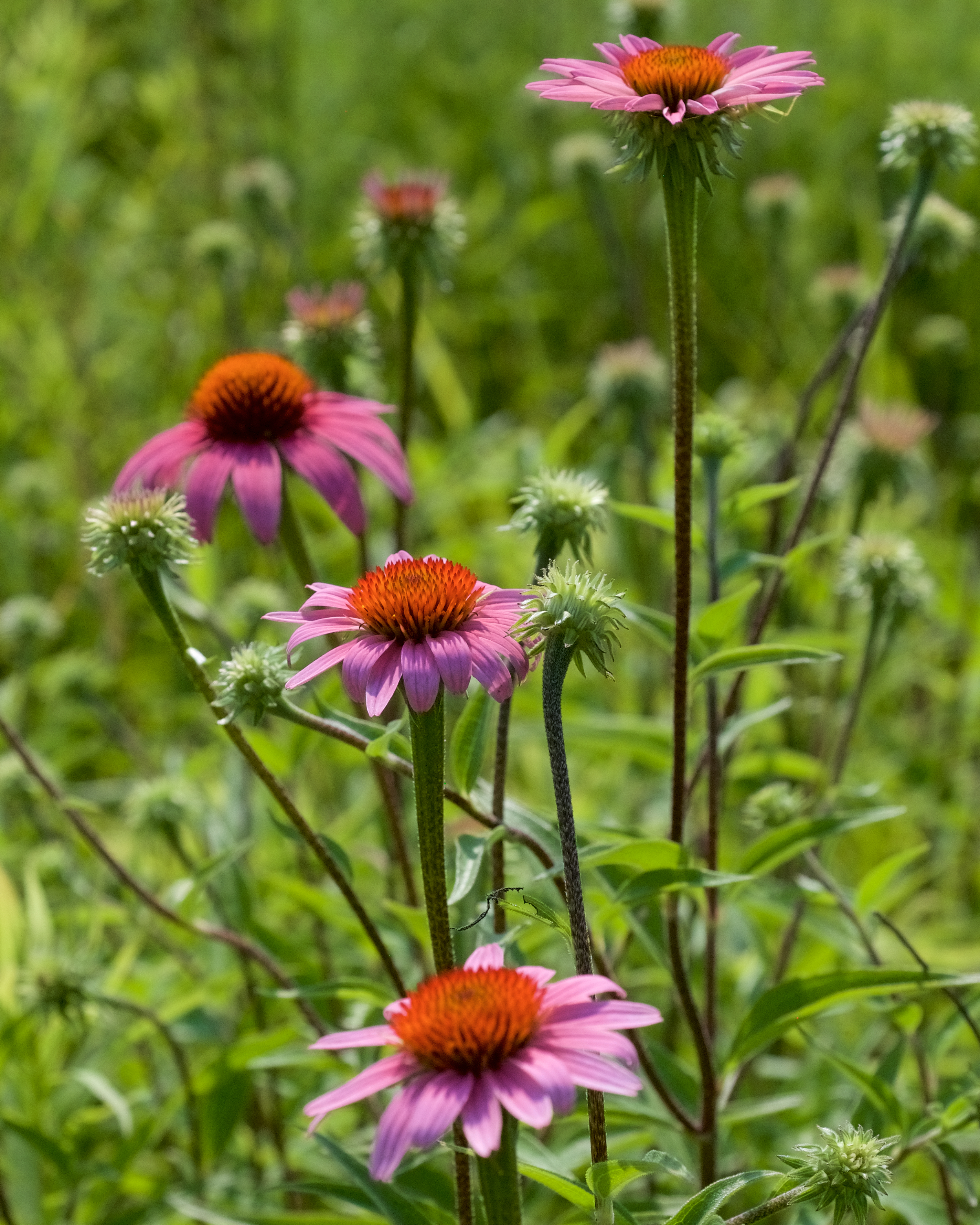
Purple Coneflower. Echinacea purpurea, the eastern purple coneflower, purple coneflower, hedgehog coneflower, or Echinacea, is a North American species of flowering plant in the family Asteraceae. It is native to parts of eastern North America and present to some extent in the wild in much of the eastern, southeastern and midwestern United States, as well as in the Canadian Province of Ontario. It is most common in the Ozarks, the Mississippi Valley, and the Ohio Valley. Its habitats include dry open woods, prairies, and barrens.
Growing & care
- Sun: full sun (6+ hours) for the sturdiest stems and heaviest bloom. Tolerates partial sun with reduced flowering.
- Water: low to moderate once established. Drought-tolerant by year two; soak during prolonged dry spells.
- Soil: average to lean, well-drained. Rich soils produce floppy growth that needs staking.
- Hardiness: USDA zones 3–9 — one of the most cold-hardy perennials available.
- Bloom: June–September; deadheading extends the window but leave the last flush of seed heads standing for birds.
- Spacing: 18–24 inches apart for good airflow.
Propagation
Divide established clumps every 3–4 years in spring or fall to maintain vigor — single crowns split into 3–5 divisions. Seed grown indoors 8–10 weeks before last frost flowers in the second year. Some named cultivars are sterile and must be propagated by division or root cutting.
Common problems
Aster yellows, a phytoplasma disease spread by leafhoppers, causes deformed green flowers — remove and destroy infected plants. Powdery mildew appears in crowded plantings; improve airflow and water at soil level. Japanese beetles chew flowers in early summer; hand-pick in the cool morning. Echinacea is non-toxic to dogs and cats per ASPCA listings.
Purple Coneflower — seeds, tools & books
Native range
Native to 24 states