California Poppy
Eschscholzia californica
Also called: Golden Poppy
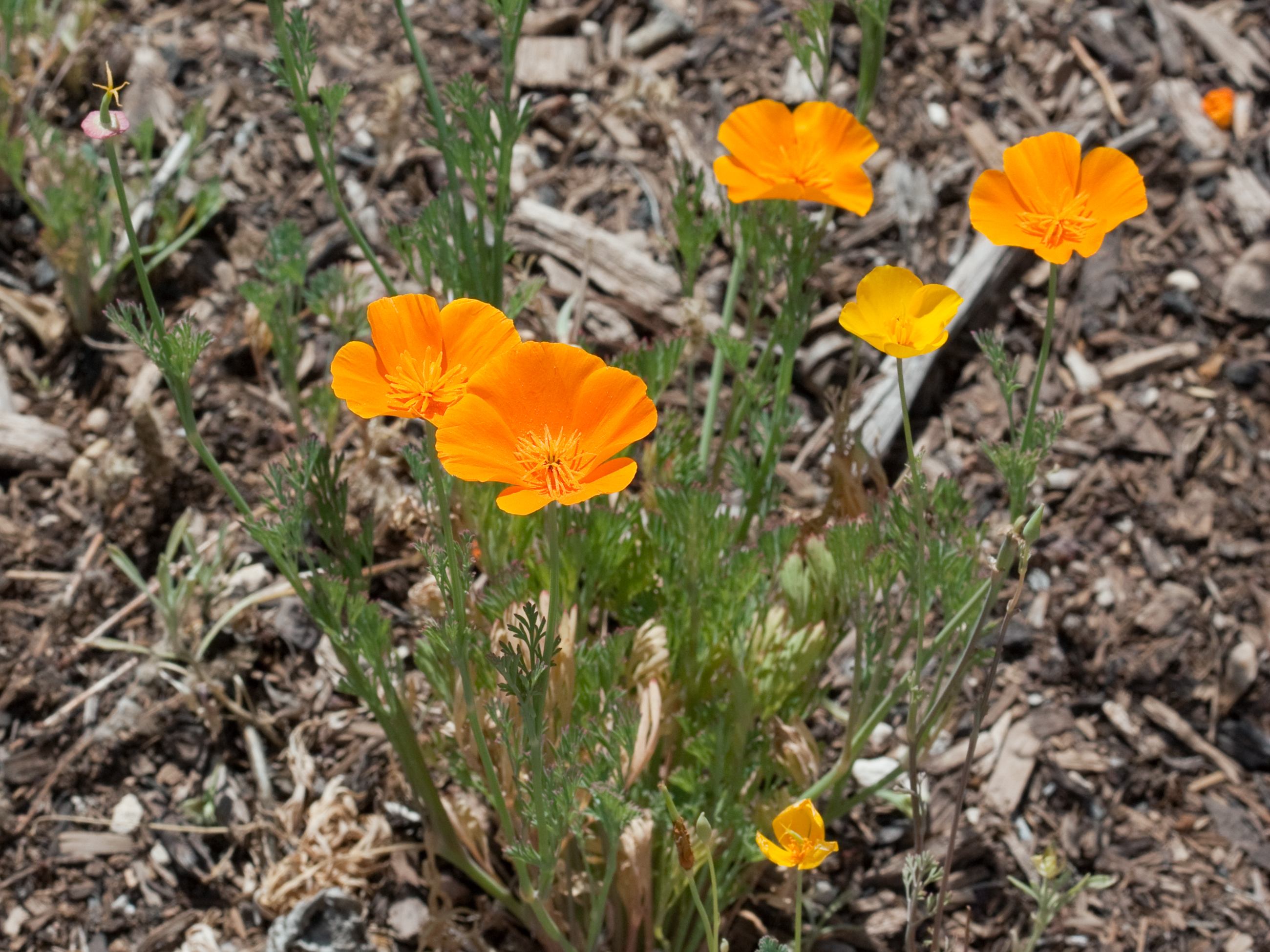
California Poppy. Eschscholzia californica, the California poppy, golden poppy, Mexican poppy, California sunlight or cup of gold, is a species of flowering plant in the family Papaveraceae, native to the United States and Mexico. It is cultivated as an ornamental plant flowering in summer, with showy flowers in brilliant shades of red, orange and yellow. It is also used as food or a garnish. It had various uses in indigenous herbalism. It became the official state flower of California in 1903.
Growing & care
- Sun: full sun, minimum 6 hours. Flowers close in shade and on cloudy mornings.
- Water: very low. Rainfall alone produces the best stands; irrigation extends bloom only modestly and encourages floppy growth.
- Soil: sandy, lean, sharply drained. Heavy or fertile soil reduces flowering and shortens lifespan.
- Hardiness: annual in most of the US; reseeds reliably in USDA zones 6–10 and can behave as a short-lived perennial in zones 8–10.
- Sowing: broadcast directly in fall (October–November) or very early spring. Cool moisture triggers germination.
- Bloom: March–June across most of its range; later in cooler climates.
Propagation
Self-sows readily — let a portion of the bed go to seed and let nature handle next year's planting. To collect seed, watch for the slender green pods that develop after petal drop; they split with an audible pop when ripe, so harvest pods just before they brown fully. The deep taproot resents transplanting; sow where plants are to grow.
Common problems
Poppies bloom poorly in rich, irrigated beds — the issue is almost always too-good growing conditions. Aphids occasionally cluster on flower stalks; a strong hose spray removes them. Damping-off affects seedlings in wet, cool springs; thin to 6 inches apart and avoid mulching young plants. Mild sedative alkaloids make California poppy a folk remedy but mean ingestion can cause sedation in pets — keep dogs and cats from grazing established stands.
California Poppy — seeds, tools & books
Native range
Native to 7 states