Autumn Sage
Salvia greggii
Also called: Cherry Sage, Texas Sage
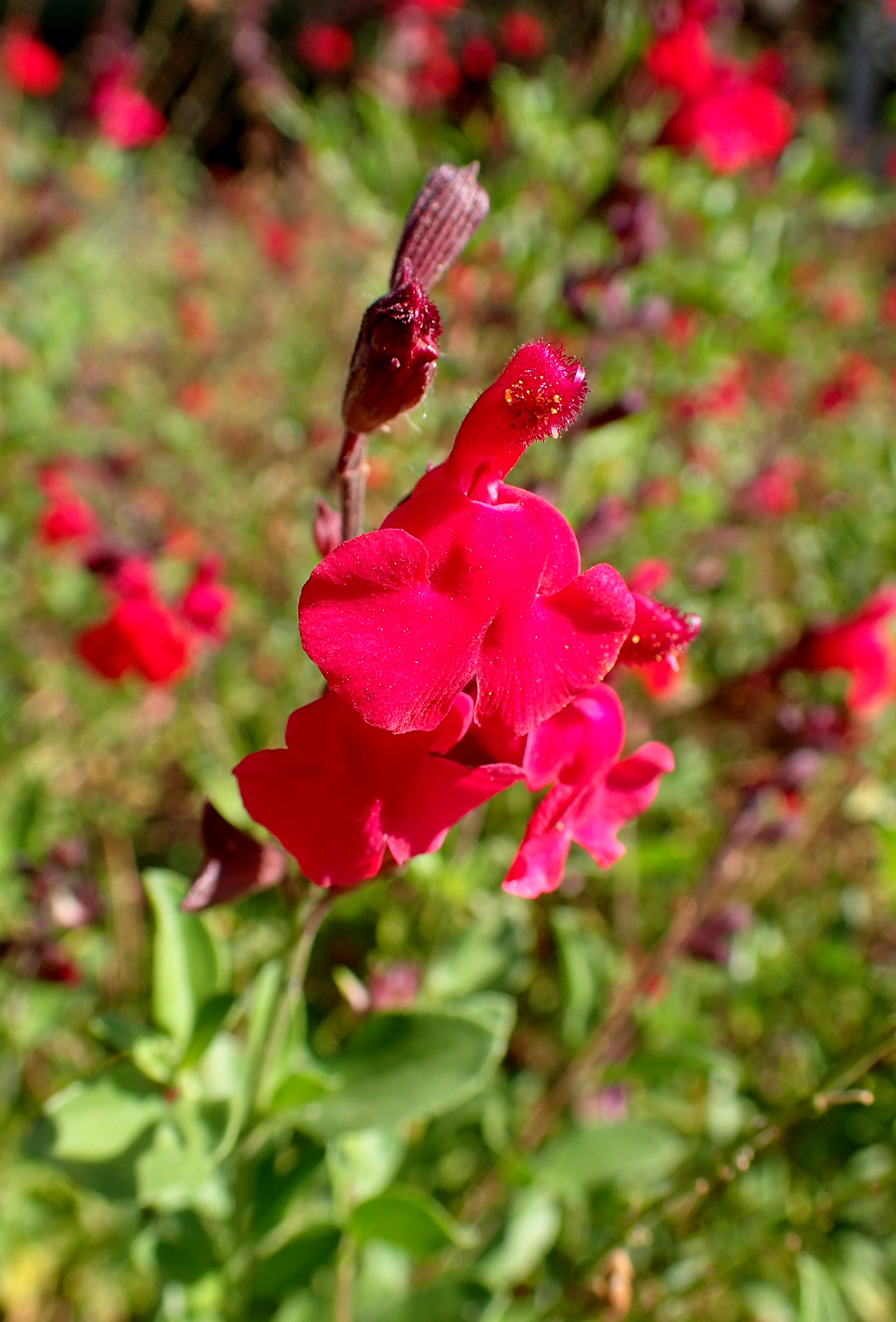
Autumn Sage. Salvia greggii, the autumn sage, is a herbaceous perennial plant native to a long, narrow area from southwest Texas, through the Chihuahuan Desert and into the Mexican state of San Luis Potosi, typically growing in rocky soils at elevations from 5,000 to 9,000 ft. It was named and described in 1870 by botanist Asa Gray after Josiah Gregg (1806–1850), a merchant, explorer, naturalist, and author from the American Southwest and Northern Mexico, who found and collected the plant in Texas. It is closely related to, and frequently hybridizes with, Salvia microphylla. Despite the common name "autumn sage", it blooms throughout the summer and autumn.
Growing & care
- Sun: full sun for tightest growth and heaviest bloom; tolerates afternoon shade in the hottest zones.
- Water: very low once established. Drought-tolerant by the second season; rot follows overwatering in clay soil.
- Soil: rocky, sandy, or gravelly with excellent drainage. Native to alkaline limestone — handles high pH effortlessly.
- Hardiness: USDA zones 7–10; root-hardy in zone 6 with mulch but dies back to the ground.
- Mature size: 2–3 feet tall and wide, depending on cultivar.
- Pruning: shear lightly by one-third after the heavy spring flush to stimulate a second wave; cut back hard in late winter to prevent woody legginess.
Propagation
Softwood cuttings in late spring through summer root within 2–3 weeks in moist sand or perlite. Take 4-inch tips, strip lower leaves, dip in rooting hormone, and tent with plastic until established. Seed-grown plants vary widely; cuttings keep cultivar color true.
Common problems
Leggy, sparse growth almost always means too much water or too much shade. Powdery mildew appears in humid summers with crowded plantings — wider spacing fixes it. Spittlebugs leave foamy masses on stems but cause little real damage; a hose spray washes them off. Deer and rabbits generally avoid the strongly aromatic foliage. Autumn sage is non-toxic to dogs and cats per ASPCA listings — a pet-safe choice for hummingbird gardens.
Autumn Sage — seeds, tools & books
Native range
Native to 3 states