Texas Bluebonnet
Lupinus texensis
Also called: Texas Lupine, Buffalo Clover, Wolf Flower
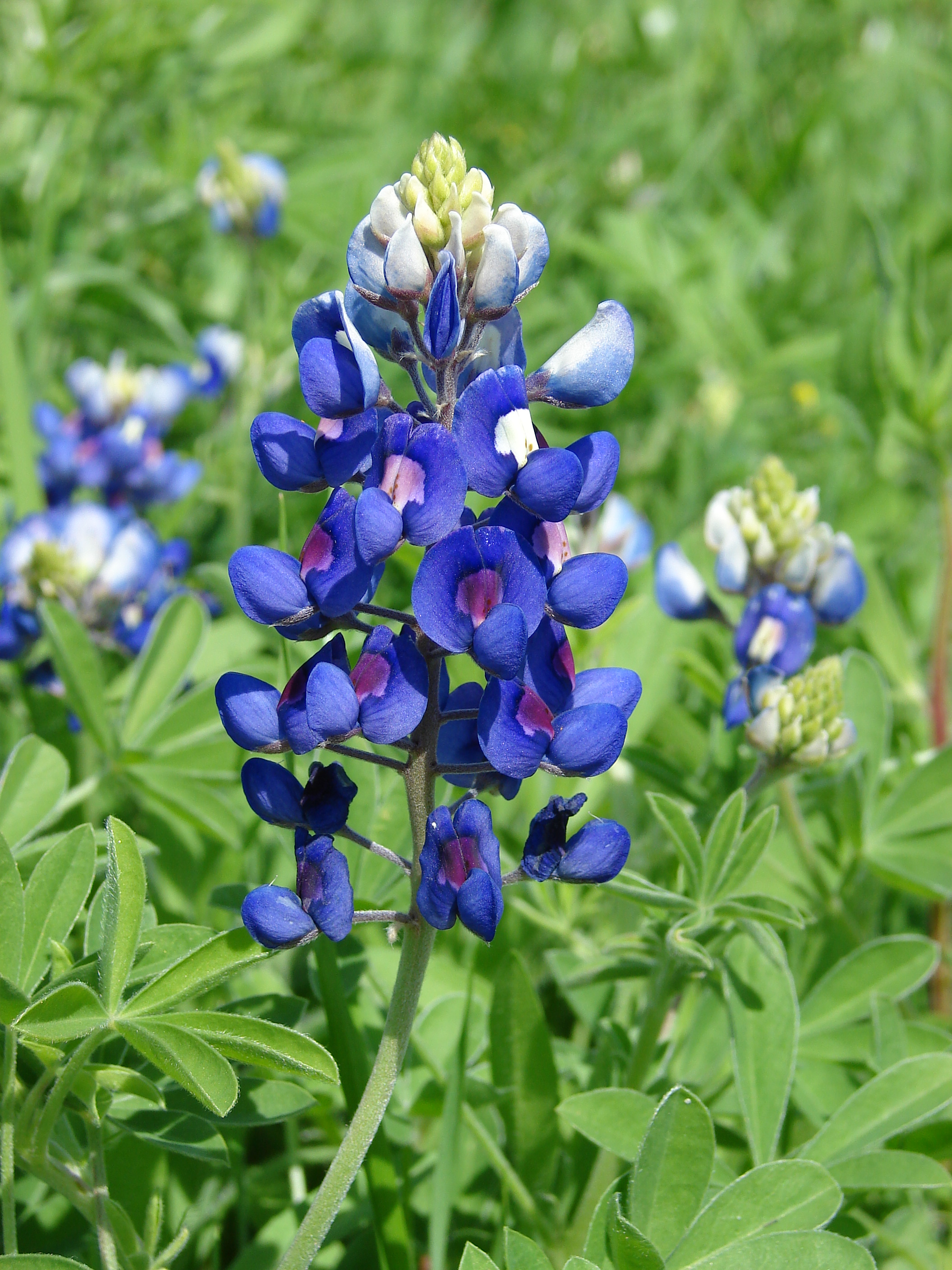
Texas Bluebonnet. Lupinus texensis is the state flower of Texas and one of six bluebonnet species native to the Lone Star State. A cool-season annual in the legume family, it germinates in fall, overwinters as a rosette, and erupts into deep-blue racemes from March through May across roadsides, prairies, and Hill Country fields.
Growing & care
- Sun: full sun, at least 6 hours daily.
- Water: rainfall only after fall germination; overwatering causes crown rot.
- Soil: alkaline, sandy or rocky, sharply drained. Lean soil produces stronger plants and more flowers than enriched garden beds.
- Hardiness: USDA zones 7–9; the seed coat tolerates winter cold but established rosettes need mild winters.
- Bloom: March–May, peaking in early April across central Texas.
- Sow: September–November in moist soil. Press seed into the surface — do not bury.
Propagation
Scarify the hard seed coat by nicking with a file or soaking overnight in warm water to break dormancy. Press seeds gently into the soil surface and keep lightly moist for 2–3 weeks until cotyledons appear. Do not fertilize — bluebonnets fix their own nitrogen via root nodules, and rich soil suppresses flowering.
Common problems
Pill bugs and snails damage seedlings in damp falls; bait sparingly. Root rot follows poor drainage — bluebonnets do not tolerate wet feet. Powdery mildew can affect crowded stands in humid coastal zones. The seed pods are toxic to dogs and cats: keep pets clear of seeding plants in late spring.