Big Bluestem
Andropogon gerardii
Also called: Turkey Foot
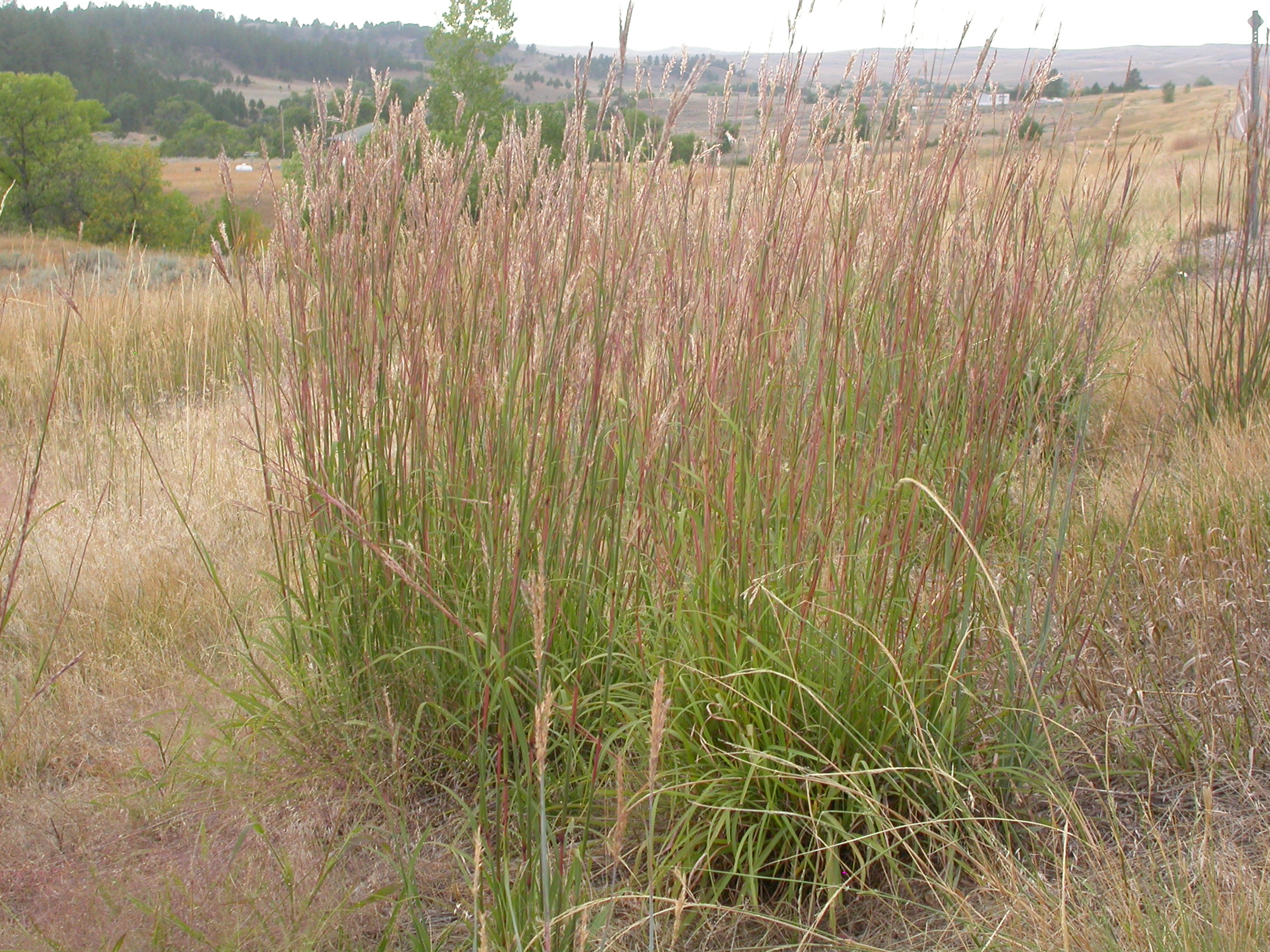
Big Bluestem. Andropogon gerardii, the big bluestem or turkey foot, is a warm-season clumping grass that was the dominant species of the North American tallgrass prairie. Blue-green summer stems reach 4–8 feet and turn coppery-bronze in fall, topped by distinctive three-parted seed heads resembling a turkey's foot. Once covering millions of acres of the Great Plains, it remains a signature plant of prairie restorations.
Growing & care
- Sun: full sun. Essential for upright growth and fall color.
- Water: very low once established; deep roots reach moisture during drought.
- Soil: adapts to most soils from sand to clay; prefers deep, fertile prairie loam.
- Hardiness: USDA zones 4–9.
- Spacing: 24–36 inches; forms substantial clumps over time.
- Cutback: mow or shear to 4–6 inches in late winter before spring growth.
Propagation
Divide established clumps in spring as new growth emerges. Fresh seed sown in fall and naturally cold-stratified germinates the following spring; prairie restorations are typically established from seed. Plants take 2–3 years to reach full stature.
Common problems
Big bluestem is remarkably trouble-free. Flopping occurs only in too much shade or excessively rich, wet soil. Rust occasionally spots leaves in humid years. Its large size overwhelms small gardens — site it as a specimen or in prairie-scale plantings. Non-toxic to dogs and cats; an excellent forage grass and host plant for several skipper butterfly species, with seeds and cover supporting prairie birds and small mammals.
Big Bluestem — seeds, tools & books
Native range
Native to 44 states
.jpg)