Eastern Prickly Pear
Opuntia humifusa
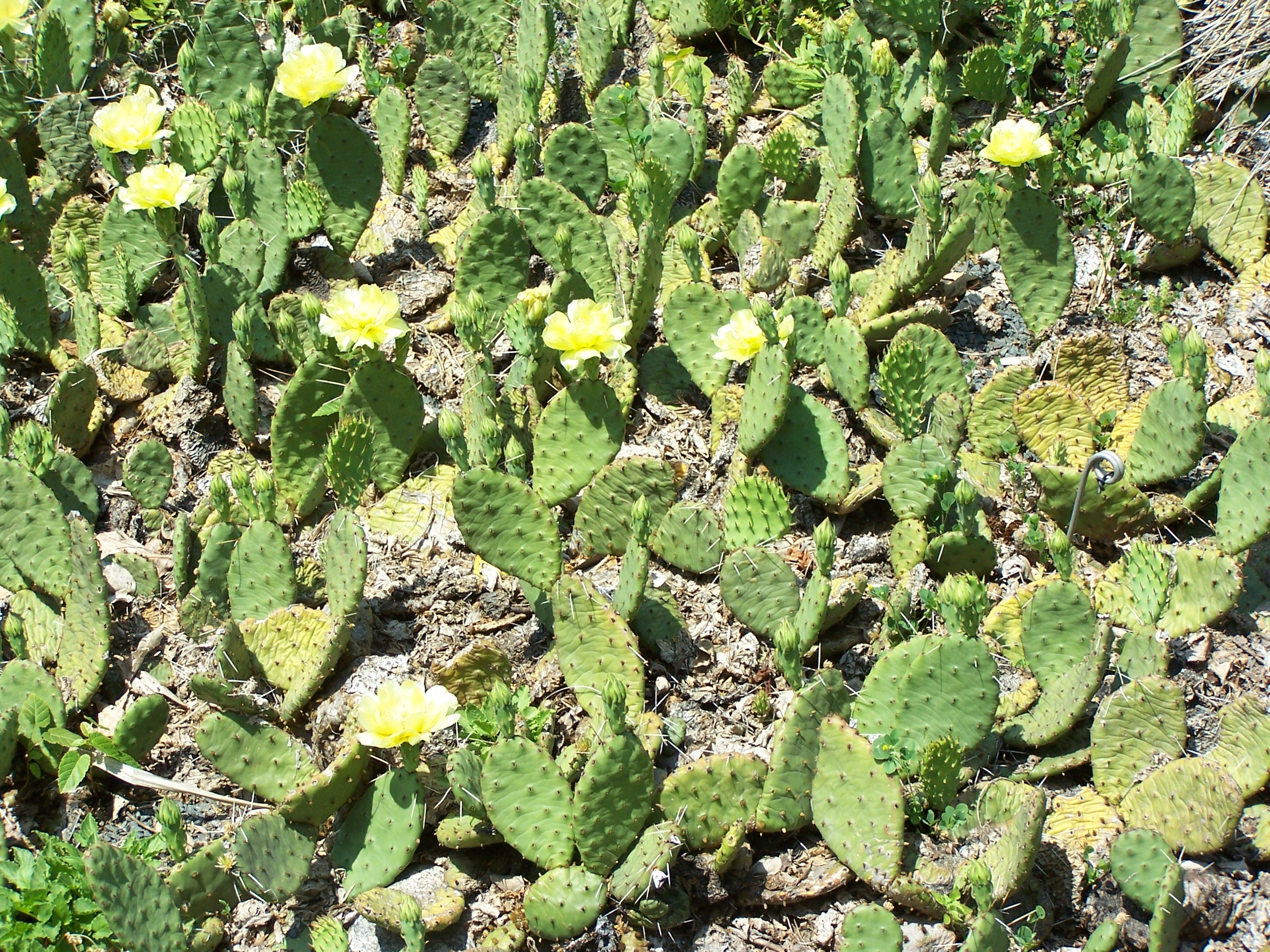
Eastern Prickly Pear. Opuntia humifusa, the eastern prickly pear, is a low-growing cactus native to sandy soils, rock outcrops, and open woods across the eastern and central United States — the most cold-hardy and widely distributed cactus in the region. Flattened green pads bear large waxy yellow flowers in early summer, often with red centers, followed by edible reddish-purple fruit called tunas. Remarkably tolerant of winter cold for a cactus.
Growing & care
- Sun: full sun. Essential for flowering and healthy pads.
- Water: very low. Rainfall is sufficient in most of its range; overwatering causes rot.
- Soil: sandy, gravelly, sharply drained. Will not tolerate heavy wet clay.
- Hardiness: USDA zones 4–9 — survives hard winters by dehydrating and flattening against the ground.
- Spacing: 24–36 inches; spreads slowly into low colonies.
- Handling: wear thick gloves — beyond the obvious spines, the tiny hair-like glochids detach easily and irritate skin.
Propagation
The easiest cactus to propagate: detach a pad, let the cut end callous for a week, then lay or shallowly plant it in dry sandy soil. Roots form within a few weeks. Seed from ripe fruit also germinates but is far slower.
Common problems
Rot from wet, poorly drained soil is the only real threat — site on a slope or in raised gritty beds. Pads may shrivel and lie flat in winter, which is normal cold-hardiness behavior, not death. Cochineal scale appears as white cottony masses on pads; scrape off or hose down. The glochids are the main hazard to people and pets — they cause skin and mouth irritation on contact, so site away from pathways and pet areas. The fruit and de-spined pads are edible to humans.
Eastern Prickly Pear — seeds, tools & books
Native range
Native to 34 states