Mexican Hat
Ratibida columnifera
Also called: Prairie Coneflower, Upright Prairie Coneflower

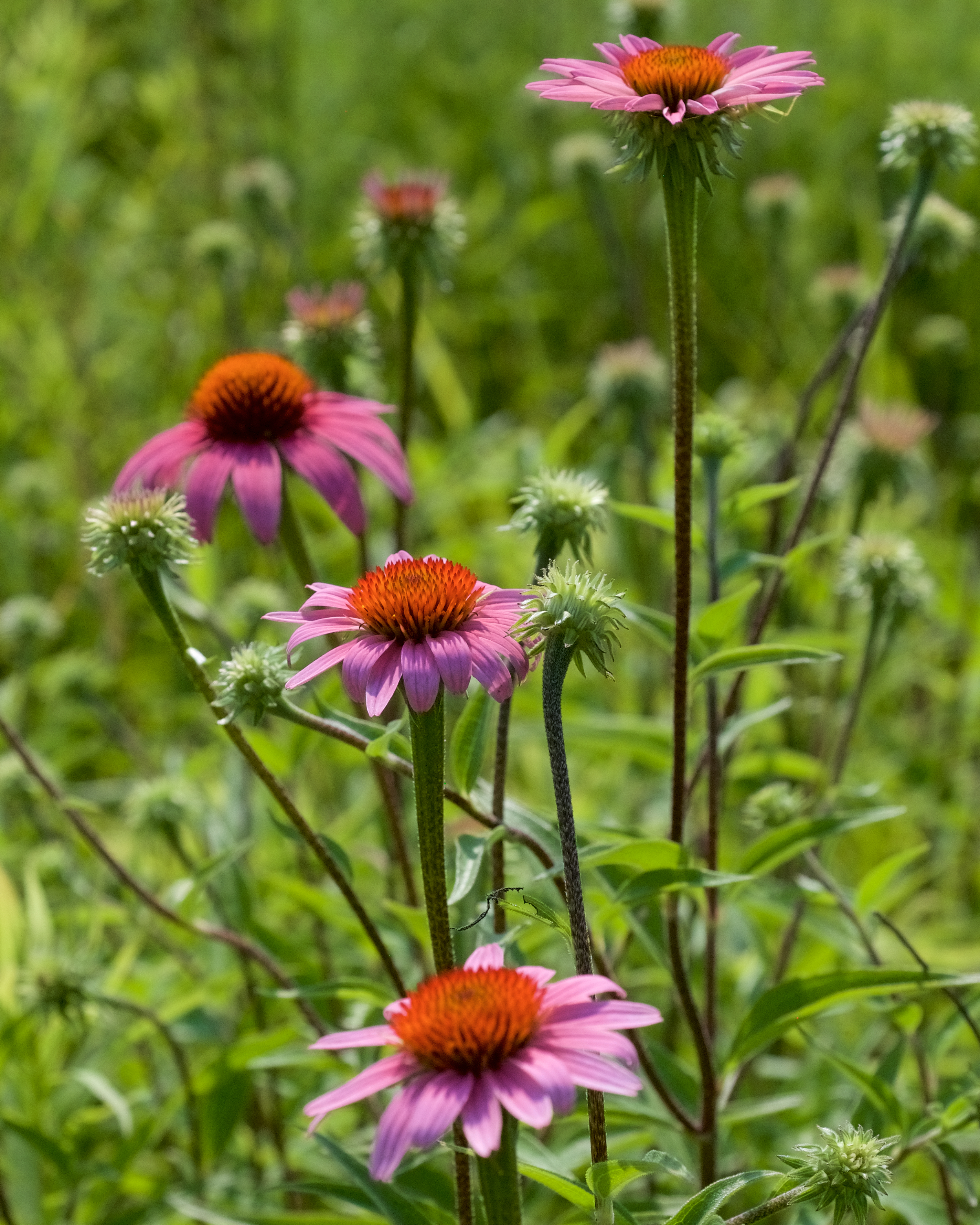
Mexican Hat. Ratibida columnifera, commonly called Mexican hat or prairie coneflower, is a short-lived herbaceous perennial native to prairies, plains, and roadsides across the central and western United States. Distinctive flowers feature a tall columnar brown central cone surrounded by drooping yellow (sometimes red-and-yellow) ray petals, resembling a sombrero. Blooms prolifically from late spring through summer and is exceptionally drought-tolerant.
Growing & care
- Sun: full sun. Essential for sturdy stems and heavy bloom.
- Water: very low. Thrives on neglect; overwatering produces floppy growth.
- Soil: lean, well-drained. Tolerates poor, rocky, sandy, and clay soils; rich soil shortens its life.
- Hardiness: USDA zones 4–9.
- Spacing: 12–18 inches.
- Deadhead: optional — leaving seed heads encourages self-sowing and feeds birds.
Propagation
Direct-sow seed in fall or early spring; light aids germination, so barely cover. Mexican hat often blooms its first year from an early sowing and self-sows reliably in undisturbed ground. Division is possible but the taproot makes it tricky — seed is easier.
Common problems
Mexican hat is nearly carefree in the lean, dry conditions it prefers. In rich or irrigated soil it grows leggy, flops, and is short-lived. It self-sows freely, which is welcome in naturalized plantings but may need deadheading in tidy borders. Aster yellows occasionally distorts flowers. Non-toxic to dogs and cats per ASPCA listings, and a superb drought-tolerant native for pollinators, prairie gardens, and tough hot sites.
Mexican Hat — seeds, tools & books
Native range
Native to 15 states