Switchgrass
Panicum virgatum
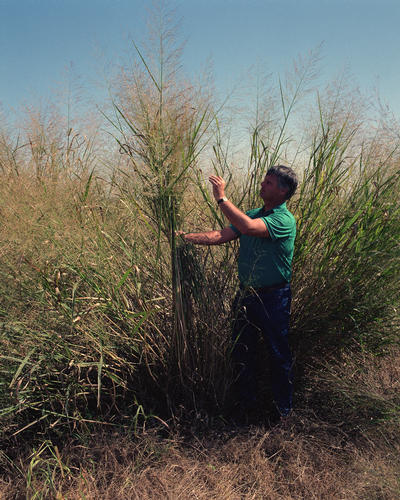
Switchgrass. Panicum virgatum, commonly known as switchgrass and panic grass, is a perennial warm season bunchgrass native to North America, where it occurs naturally from 55°N latitude in Canada southwards into the United States and Mexico. Switchgrass is one of the dominant species of the central North American tallgrass prairie and can be found in remnant prairies, in native grass pastures, and naturalized along roadsides. It is used primarily for soil conservation, forage production, game cover, as an ornamental grass, in phytoremediation projects, fiber, electricity, heat production, for biosequestration of atmospheric carbon dioxide, and more recently as a biomass crop for the production of ethanol and butanol.
Growing & care
- Sun: full sun for upright stems; part shade causes flopping.
- Water: very low once established. Drought-tolerant from deep roots; tolerates occasional flooding too.
- Soil: adapts to nearly any soil including clay, sand, and poor ground.
- Hardiness: USDA zones 4–9 — broadly adapted across the continent.
- Spacing: 24–36 inches; clumps expand slowly without running.
- Cutback: shear to 4–6 inches in late winter before new growth emerges.
Propagation
Divide established clumps in spring as new shoots appear — slice the crown into sections with a sharp spade. Fresh seed sown in fall onto firm, weed-free soil germinates the following spring; cold stratification improves the rate. Named cultivars like 'Northwind', 'Shenandoah', and 'Heavy Metal' must be divided to preserve their selected color and form.
Common problems
Flopping almost always traces to too much shade or overly rich, irrigated soil — site in lean ground and full sun. Rust occasionally spots foliage in wet years but rarely causes lasting harm. Switchgrass can self-sow in bare ground; deadhead seed heads if spread is unwanted. Non-toxic to dogs and cats, and a valuable wildlife plant — seeds feed songbirds and the dense clumps shelter ground-nesting birds and overwintering insects.
Switchgrass — seeds, tools & books
Native range
Native to 49 states