Texas Lantana
Lantana urticoides
Also called: West Indian Lantana
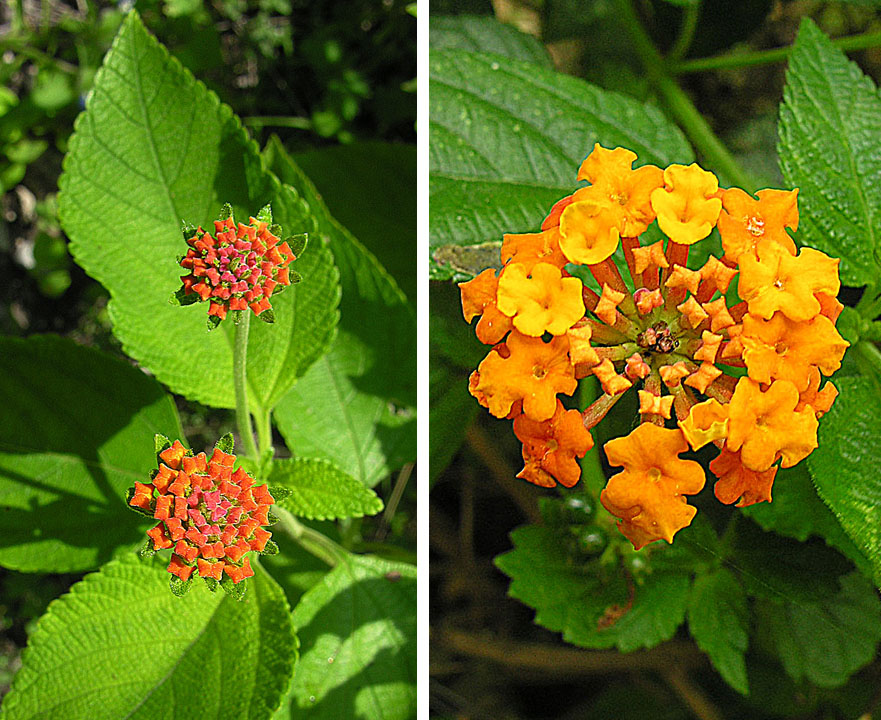
Texas Lantana. Lantana urticoides, the Texas lantana or West Indian lantana, is a thorny deciduous to evergreen shrub native to the south-central United States and northern Mexico. Multicolored flower clusters opening yellow and aging through orange to red on the same head bloom from spring through hard frost. A premier butterfly nectar source and one of the few flowering shrubs that thrives in extreme heat and drought.
Growing & care
- Sun: full sun, minimum 6 hours. Shade reduces flowering dramatically.
- Water: very low once established. Tolerates extreme heat and drought; overwatering reduces bloom.
- Soil: any well-drained soil including poor, rocky, or alkaline. Adapts to coastal salt spray.
- Hardiness: USDA zones 8–11 — root-hardy in zone 8 (dies back to the ground), evergreen in zones 9–11.
- Mature size: 3–6 feet tall and wide depending on cultivar and climate.
- Pruning: cut back hard (to 6–12 inches) in late winter to rejuvenate. Light shearing during the growing season triggers fresh bloom flushes.
Propagation
Softwood cuttings in early summer root readily in moist sand within 2–3 weeks. Take 4–6 inch tips, strip lower leaves, dip in rooting hormone, and keep humid until established. Seed germinates erratically and produces variable plants; the sterile, non-invasive cultivars must be propagated by cuttings exclusively.
Common problems
Lantana lace bug causes leaf bronzing in hot dry summers; insecticidal soap helps if applied early. Whiteflies cluster on undersides in greenhouse conditions but rarely outdoors. Cold-zone winter kill is normal in zones 8 and below — wait until late spring to assess whether the root system survived before replacing. CRITICAL: lantana is highly toxic to dogs, cats, livestock, and humans. Unripe green berries contain triterpenoids that cause liver failure and can be fatal — never plant near pet areas or children's play spaces, and remove fallen berries promptly.
Texas Lantana — seeds, tools & books
Native range
Native to 5 states
_(11628267034).jpg)